Psychology
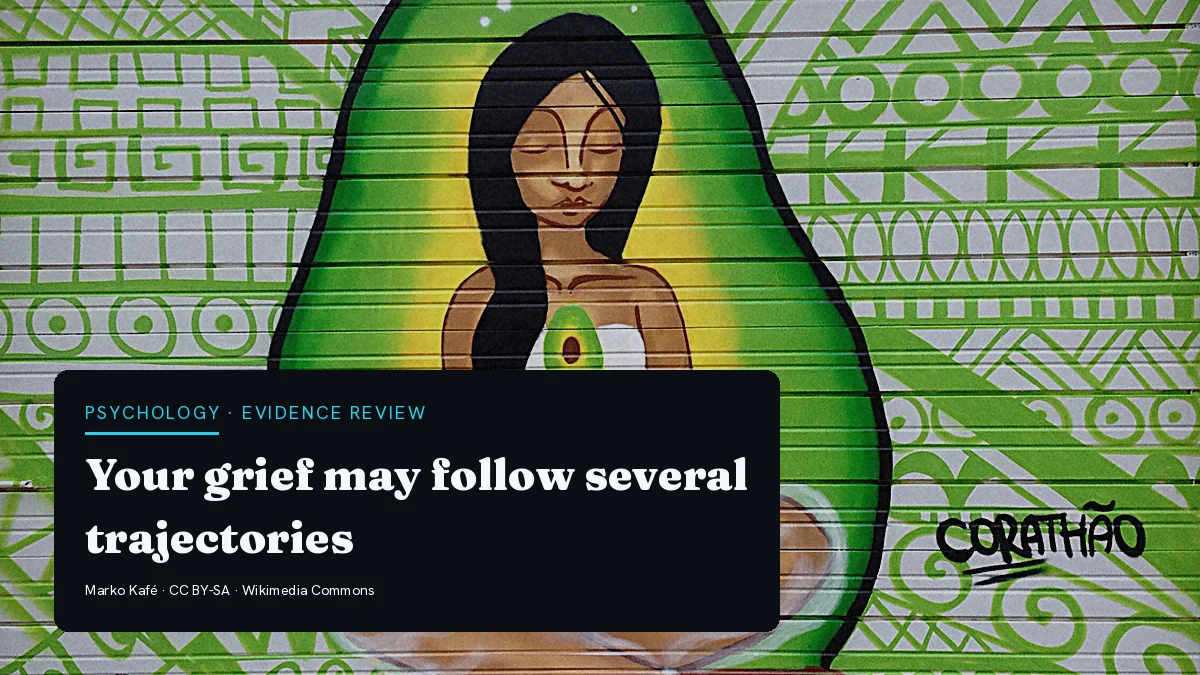
People facing bereavement usually move through 7 observed patterns long before any research can justify a timetable — the groups describe symptoms, not how someone should grieve
You are trying to place your grief on a timeline, wondering whether this reaction should have changed by now. Research on grief trajectories gives ...
People who say “I should be better by now” aren’t proving their grief is abnormal—research finds several symptom courses after bereavement
You are trying to place your grief on a timeline, watching symptoms ease, return in waves, or stay close each day. The research answer ...
Grief trajectories rarely follow one path: your symptoms can stay low, ease slowly, or remain high after bereavement
You are looking at your grief and trying to decide whether its shape means something about you. The clearest answer from trajectory research is ...
People who fit care into the day don’t show one standard health pattern — studies find mental strain, physical discomfort, poorer health, disrupted routines, and occasional memory advantages
You are fitting care into the day and wondering what the numbers say about your health. The research record, alongside public names such as ...
Your Dark Triad result is not a single diagnosis in disguise — it is a connected set of personality measures whose correlations stop short of making narcissism, Machiavellianism, and psychopathy identical
You just read a Dark Triad result and wonder whether the three scores describe one hidden personality. The evidence supports a narrower answer: narcissism, ...

People who compare narcissism, Machiavellianism, and psychopathy usually find a cluster, not one cause — the three scores relate strongly while remaining separate personality traits
You have reached the Dark Triad question because one personality label feels too large for the person in front of you. The research answer ...
Workplace bullying is not simply a difficult personality — it is repeated work-related, person-related or intimidating behaviour that can track with stress, pain and reduced confidence
You leave another meeting replaying the same comments, the missing information, and the task that was made harder in front of everyone. Workplace bullying ...
People who keep saying “it was just one bad exchange” aren’t necessarily overreacting — workplace bullying research links repeated mistreatment with effects that can reach sleep, confidence and work quality.
You leave another workplace exchange wondering whether the problem reaches beyond one bad moment. Research says workplace bullying can touch health, sleep, confidence, work ...
People who recognize PTSD symptoms but still feel the label misses something aren’t describing a character flaw — ICD-11 research measures a wider pattern called disturbances in self-organization
You arrived with two labels in front of you: PTSD and complex PTSD. The research supports a real distinction, while also showing that the ...
Your PTSD or CPTSD percentage isn’t a universal rate — it changes with the criteria, the population studied, and the symptoms researchers measure
You arrived with two labels and a page full of percentages, trying to tell whether PTSD or complex PTSD fits the research you are ...