Grief
Your grief curve is not a personal score — it is a group pattern built from people whose symptoms changed in similar ways across repeated assessments
You have counted the hard mornings, the quiet afternoons, and the sudden return of pain. The numbers suggest that grief follows several trajectories rather ...
People facing bereavement usually move through 7 observed patterns long before any research can justify a timetable — the groups describe symptoms, not how someone should grieve
You are trying to place your grief on a timeline, wondering whether this reaction should have changed by now. Research on grief trajectories gives ...
People who say “I should be better by now” aren’t proving their grief is abnormal—research finds several symptom courses after bereavement
You are trying to place your grief on a timeline, watching symptoms ease, return in waves, or stay close each day. The research answer ...

Grief trajectories rarely follow one path: your symptoms can stay low, ease slowly, or remain high after bereavement
You are looking at your grief and trying to decide whether its shape means something about you. The clearest answer from trajectory research is ...

People who say “I feel fine until a reminder appears” usually share these 7 markers of relational grief long before the loss feels settled
You have lost someone close, and grief keeps appearing in places you did not expect. Your body feels changed, relationships feel different, and familiar ...
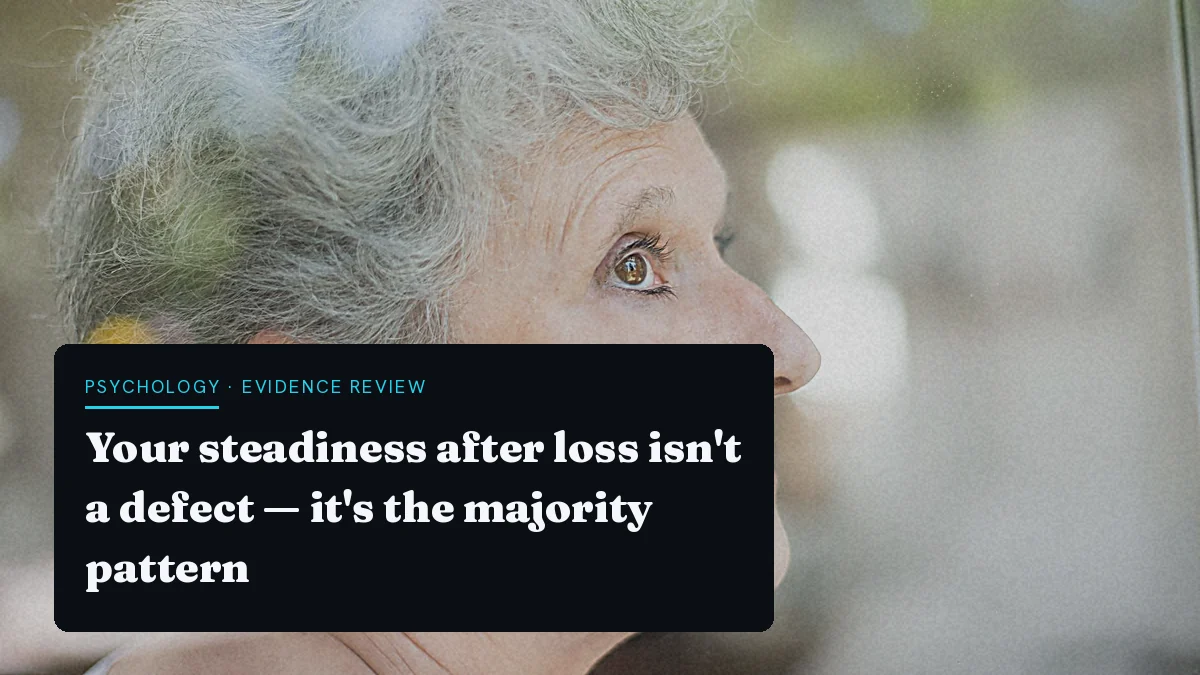
If you laughed at something ordinary after the loss and felt guilty, that guilt is common — and the reason it’s misplaced is more specific than kindness
You caught yourself laughing at something ordinary. Maybe you slept through the night, or noticed you were hungry, or felt the day turn light ...