Memory
When your memories point to different ages, you’re not getting the bump wrong — the prompt changes the pattern
You arrive with a birthday, a song, or a life event in mind and ask whether the reminiscence bump has one exact number. The ...
If your memories seem locked to one decade, they aren’t showing a universal human schedule — the bump can span different years across important events, words, and life scripts
You have heard that memories from adolescence and early adulthood stand out, and now you are checking whether that claim fits your own memories. ...
If your memories keep landing in adolescence or early adulthood, that isn’t proof every person shares your pattern — older adults often report a bump, but its timing changes with the prompt
You are trying to make sense of why memories from some years seem to gather together. The research calls this pattern the reminiscence bump: ...
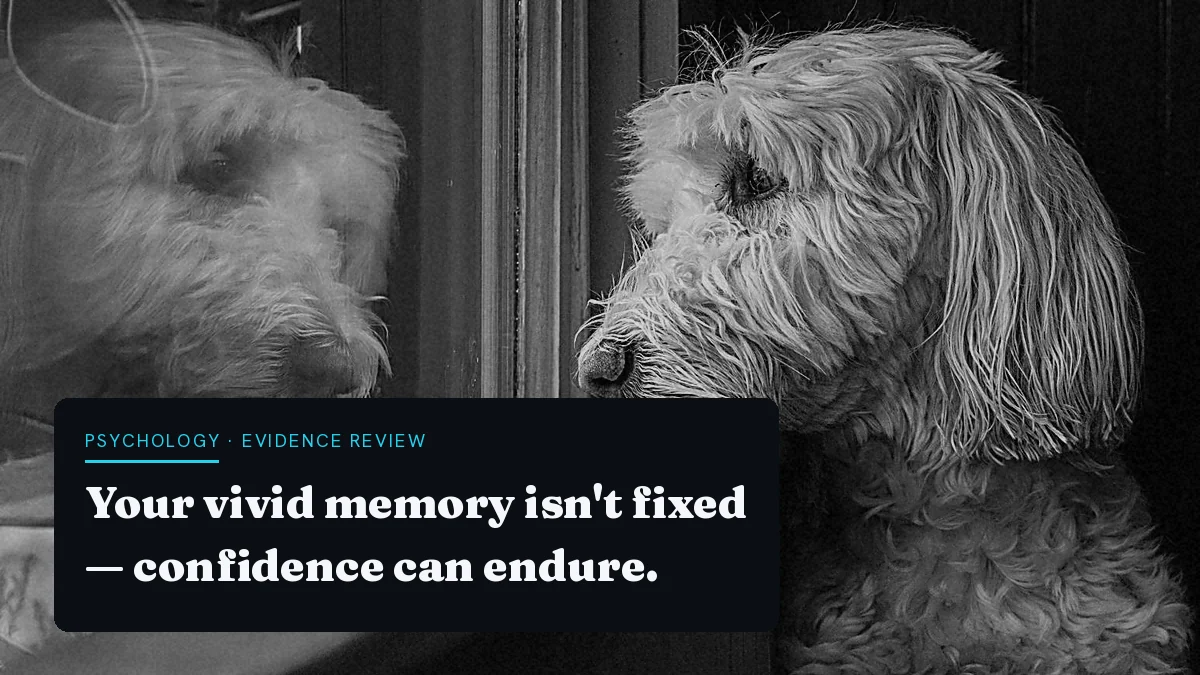
When you say “I remember it exactly,” you aren’t necessarily mistaken — the memory can remain meaningful and vivid even when some details no longer match earlier recall.
You remember where you were when major news reached you, and the scene still feels exact. Can that strong feeling tell you how accurate ...
If you still picture where you were during September 11, the memory’s force is not evidence of perfect detail — studies found vivid recall across tested ages and time periods.
You remember where you were when major news arrived, yet another detail now feels less certain. That tension captures the main effect of flashbulb ...
When a familiar headline seems accurate, the key issue isn’t gullibility—it is whether repetition is shaping familiarity while deliberation gets a chance to correct belief
You read a headline, glance away, then trust it a little more when it appears again. Memory Relational Headlines brings two findings together: familiar ...
People who identify a face quickly are not automatically right — fast choices can make confidence more informative, while slower decisions weaken what certainty can tell you
You are trying to decide whether a witness memory can guide a face choice. Eyewitness memory can hold useful information, yet confidence alone cannot ...