Caadria2025 Editorial Team
Editorial standards, corrections policy, and how these articles are produced: https://www.caadria2025.org/masthead/
If you still talk to someone who died, you are not failing to let go — these 7 grief myths show why the bond’s meaning depends on its form, your attachment, the loss, and your culture
You still talk to the person who died, carry their values, or wake from dreams that make them feel close. The bond remains inside ...
If you still talk to, dream of, or carry the values of someone who died, these aren’t interchangeable signs of grief — 7 parts of the evidence show why each bond needs context
You still feel connected to someone who died, and you want to know what that connection says about your grief. The evidence gives no ...
If you still picture where you were during September 11, the memory’s force is not evidence of perfect detail — studies found vivid recall across tested ages and time periods.
You remember where you were when major news arrived, yet another detail now feels less certain. That tension captures the main effect of flashbulb ...
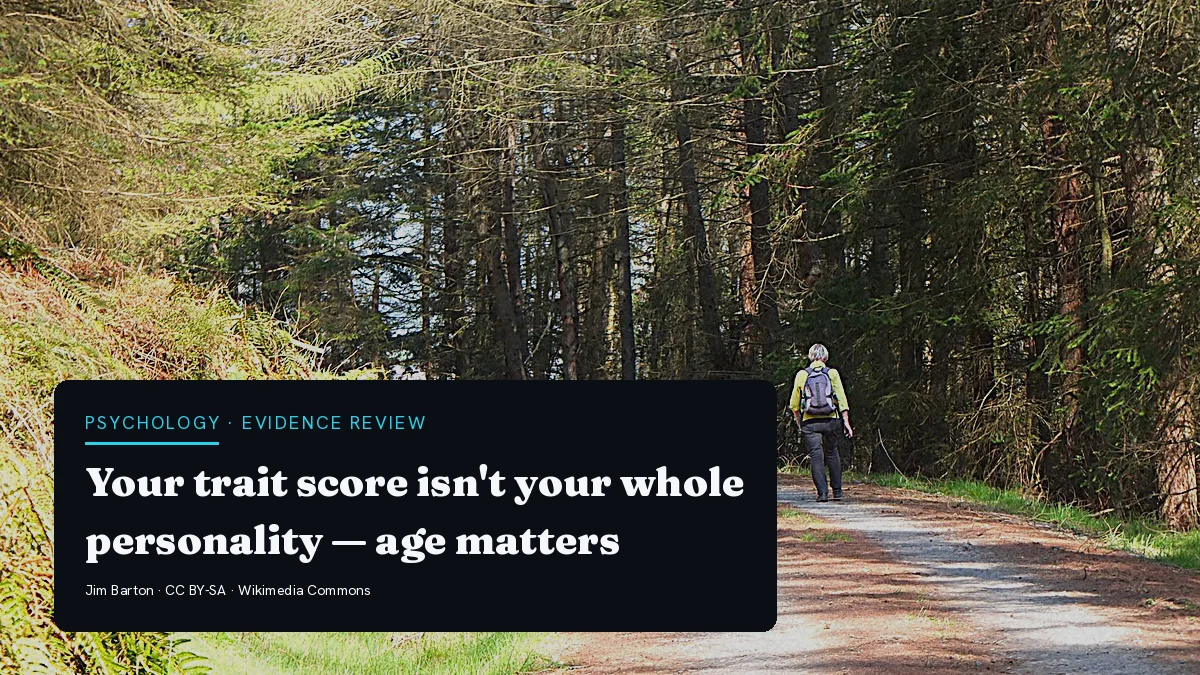
People who keep saying “I feel different now” are not describing one fixed personality — psychology says the answer is more specific than a single trait score
You notice a change in your personality and wonder whether your birth cohort helps explain it. The research supports a careful answer: age and ...
When one child seems favored, the pattern isn’t automatically golden child versus scapegoat — parents may differ by attention, discipline, enjoyment, warmth, and the child’s age
You watched one child receive patience while another received blame, and the golden-child and scapegoat labels seemed to explain it. The research gives a ...
Parents who keep seeing one child as the favorite aren’t proving a fixed golden-child script — the real pattern changes with age, gender, stress, conflict, and what part of family life is measured
You watch one sibling get warmth and another get blame, then wonder whether the golden-child and scapegoat pattern explains the family. The research supports ...
People who doubt their childhood because no referral appeared at 11 usually overlook the measured age difference — psychiatric symptoms and referrals did not rise at the same time
You keep looking for one childhood emotional neglect sign that would settle the question. The studies point to a wider pattern across mood, feelings, ...
If you expect an open personality to produce the same creative result everywhere, the evidence breaks that assumption — arts and science do not follow the same predictor.
You just saw openness described as a sign of creativity and wondered whether the label fits your own mind. The answer is narrower: research ...
If you make unusual connections but struggle on one creativity test, openness isn’t disproved — different tasks measure different outcomes that only partly overlap
You are trying to tell whether openness to experience explains your creative side. The research gives a clear link, then adds limits: Openness connects ...
If you left emotional intelligence training thinking “something shifted,” that feeling isn’t the evidence — these 7 measured findings show what changed and how far the result carries.
You finished emotional intelligence training and want to know whether the change reaches beyond the room. The clearest answer is specific: studies report gains ...